Organization & Storage
12 Small Closet Organization Ideas That Make Every Inch Count
Twelve practical small closet organization ideas for double hanging, shoes, high-shelf storage, folded sweaters and simple reach-in wardrobe layouts.
- Published
- November 12, 2026
- Reading time
- 12 minutes
- By
- NorahDecor Editorial
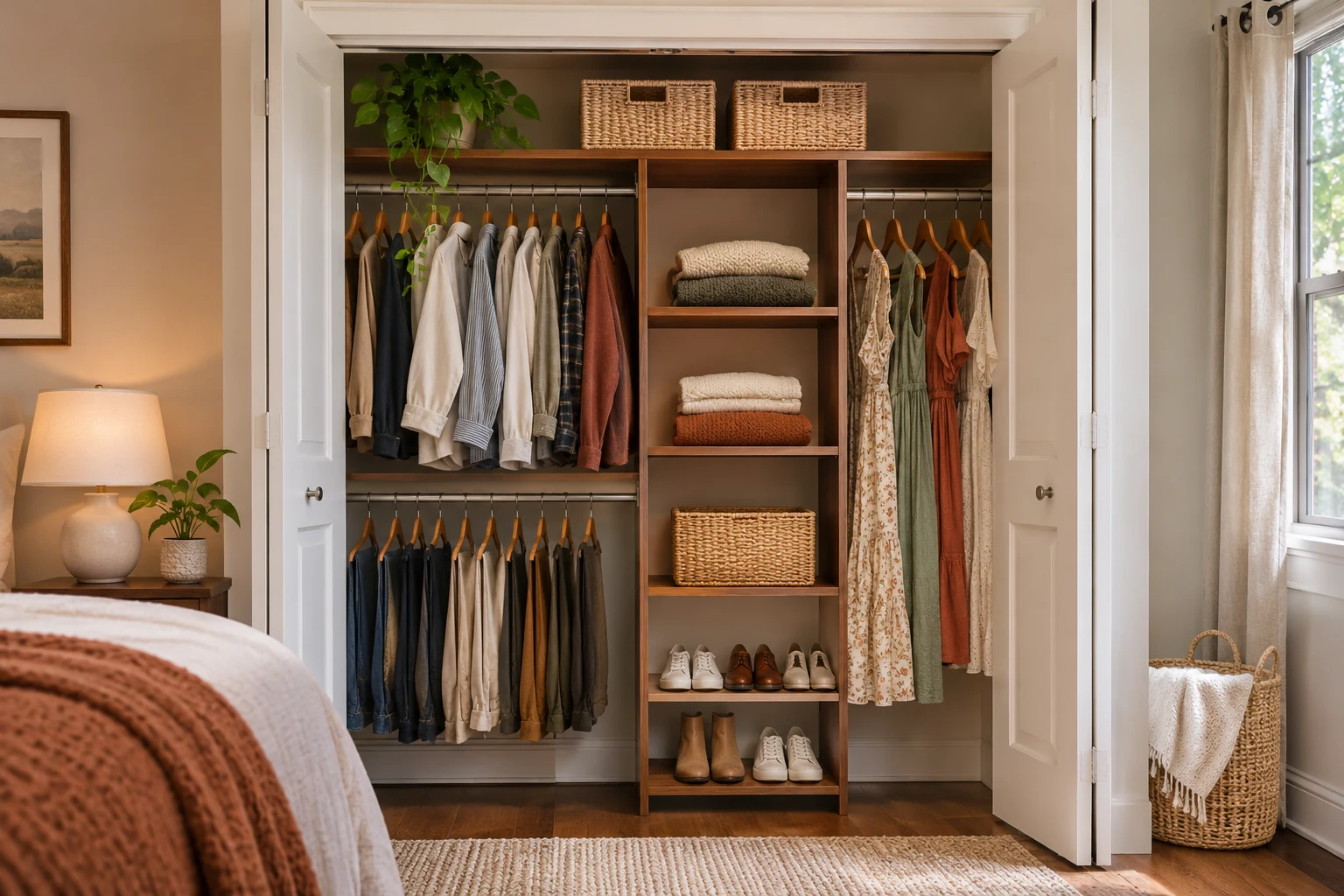
A small closet can look full even when half the space isn't doing much. Shirts hang above an empty stretch of floor, shoes disappear behind one another, and the highest shelf becomes a place for things you forget you own. Adding more bins rarely fixes that on its own.
The most useful small closet organization ideas begin with the shape of the closet and the clothes you actually wear. A double hanging rod is helpful for shirts and folded pants, but not for long dresses. A row of pretty baskets can make a shelf look calmer, but only if you can reach and identify what's inside.
These twelve ideas are designed for everyday reach-in closets, apartment wardrobes, and modest bedroom storage. Most start with rearranging what you already have. You don't need to install a custom dressing room to make getting dressed easier.
First, measure the closet you actually have
Before buying an organizer, take out enough clothing to see the walls and floor. Measure the interior width, height, and usable depth, then measure the clear opening with the doors fully open. In many closets, the opening is narrower than the inside, which means a beautifully fitted shelf may still be impossible to slide through the doorway.
Check four more things:
- The longest hanging item: Measure a coat or dress on its hanger so a second rod won't crush the hem.
- The longest everyday garment: Short shirts and folded trousers need a different amount of space than dresses.
- The door swing: Confirm that a shoe rack, hanging organizer, or bin won't hit the door.
- The access zone: Put what you reach for every morning at a comfortable height. A tall shelf isn't useful storage for daily socks.
Take a photo and sketch the rough zones. You only need a simple plan: short hanging, long hanging, folded items, shoes, and accessories. It's more useful than buying a matching set of containers before you know where they'll go.
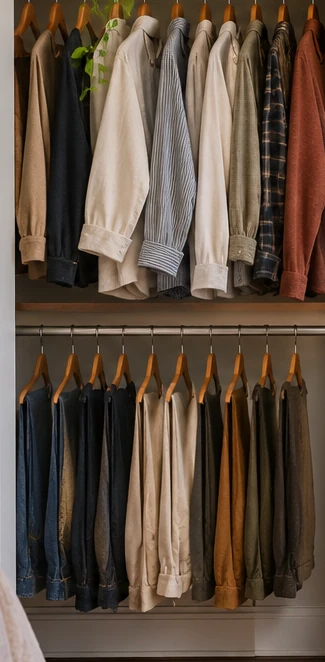
1. Use a second hanging level for short clothes
If most of your closet is filled with shirts, blouses, and trousers folded over hangers, look closely at the space beneath them. You may be able to fit a second rod below the first and create two distinct hanging levels.
The simplest approach is to keep short tops above and shorter bottoms below. Long coats and dresses should have a separate full-height section. Don't add a second rod if it makes clothes bunch up at the bottom, blocks drawers, or leaves too little clearance to remove a hanger comfortably.
Best for: Closets dominated by shorter garments, with unused space beneath the existing rod.
Before installing: Measure actual garments and check the weight rating and attachment requirements of the rod or system. A freestanding or drop-down accessory isn't automatically suitable for heavy clothing.
2. Reserve one full-height zone for longer pieces
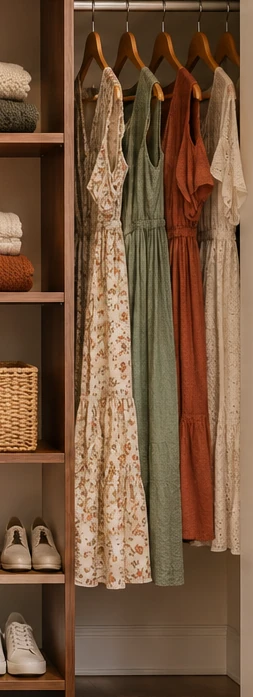
Double hanging is not the answer to everything. If your wardrobe includes long dresses, formalwear, coats, or trousers that you don't want folded, protect one uninterrupted hanging space.
A narrow long-hang section is often enough. Group long items together instead of spreading them across the rod, then use the remaining width for double hanging or shelves. This makes the layout easier to adapt when seasons change.
Best for: Mixed wardrobes where only some pieces need full-height hanging.
Avoid: Measuring the rod position without testing it with your longest garment on a real hanger.
3. Turn the top shelf into labeled seasonal storage
The highest shelf should do one job well: hold things you need occasionally, not every morning. That could be out-of-season accessories, spare bedding, or a neatly packed travel bag.
Use a small number of containers that fit the shelf depth and can be lifted safely. Choose labels you can read from below, and avoid packing a container so heavily that retrieving it becomes awkward. If the shelf is very high, use a stable step stool rather than balancing on a chair.
Best for: Closets with high shelves that become a loose collection of boxes and bags.
Try instead of buying: Sort the existing boxes into broad categories and label them before replacing them with matching baskets.
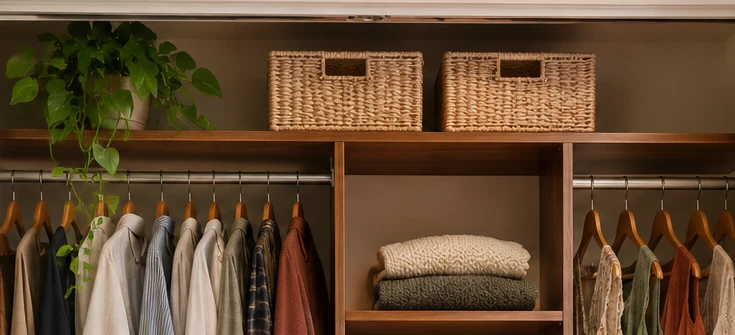
4. Give folded sweaters their own short stacks
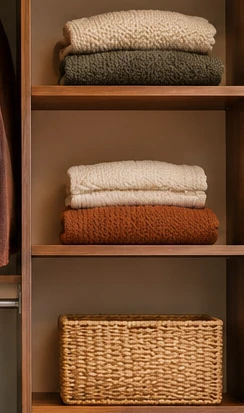
A tall tower of knitwear may appear compact, but pulling out the bottom sweater usually disturbs everything above it. Divide shelf space into smaller sections, using existing dividers, cubbies, or a few sturdy boxes placed sideways.
Fold heavy sweaters rather than hanging them if the fabric stretches under its own weight. Separate everyday layers from occasional pieces so the ones you reach for don't end up at the bottom of a pile.
Best for: Shelves that are wide but don't have enough divisions.
Small improvement: If the shelf is very deep, put less-used items behind the daily stack instead of building one impossibly tall pile.
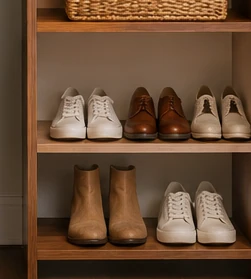
5. Get shoes off the floor without building a shoe wall
A closet floor often becomes crowded because shoes don't have assigned places. Start by keeping the pairs you wear most often in one accessible row. A low two-tier shelf can help when there is enough height beneath short garments, but a deeper rack may make it harder to reach shoes behind the front row.
Arrange by frequency of use, not just by color. Put everyday shoes at the front, boots where they won't be crushed, and occasional pairs in a box or another storage area if needed. You don't have to keep every pair in the closet just because that's where shoes have always lived.
Best for: Small closets where shoes pile up below hanging clothes.
Before you buy: Measure the height under your hanging garments, including any second rod, and check how far a shoe rack projects toward the door.
6. Use the back of the door for light accessories
The back of a hinged closet door can hold belts, lightweight scarves, caps, or small accessories that otherwise disappear into drawers. An over-the-door organizer is particularly useful for renters, provided it fits the door and doesn't prevent it from closing.
Check the clearance above and behind the door. Some organizers are too thick for a tight frame or rub against the contents of the closet. Avoid heavy loads and anything likely to swing into a mirror, trim, or nearby furniture.
Best for: Closets with hinged doors and limited shelf space.
Not suitable for: Sliding doors or very tight clearances where the organizer would interfere with operation.
7. Add a shallow drawer unit only if the doors can open
A narrow set of drawers beneath short hanging clothes can be useful for socks, underwear, gymwear, or small folded items. But it's easy to underestimate how much room drawers need when they extend.
Before ordering, tape the proposed footprint on the floor and check the drawer opening against the closet doorway. Some closets have side walls that block a drawer even when the unit fits perfectly inside.
Use furniture designed for its purpose and follow its anchoring and safety instructions. Tall or freestanding storage units can present a tip-over hazard, particularly around children; don't assume a snug fit against the wall makes an unsecured unit safe.
Best for: Closets with plenty of height beneath shorter hanging garments and a clear door opening.
Budget alternative: A low, stable bin system that can be pulled fully into view.
8. Use one easy-to-reach bin for each small category
Baskets are helpful when they collect a defined group of items: workout socks, winter scarves, or everyday belts. They're less helpful when every basket becomes a collection of unrelated things.
Choose categories before containers. One labeled bin for each group is often more effective than six decorative baskets that hide their contents. Keep daily items in open or easy-to-access storage, and use closed containers for seldom-used accessories.
Best for: Small items that don't hang neatly and get lost on open shelves.
Quick test: If you can't name the contents of a basket without opening it, its category may be too broad.
9. Swap bulky, mismatched hangers for ones that suit the clothes
Different hanger shapes can make a rod feel cluttered and push garments into one another. Consistent hanger types help spacing and keep the rail visually calm. Slim designs can free room, but very thin hangers aren't right for every item.
Use sturdy hangers for jackets, shaped hangers for pieces that need shoulder support, and gentler options for delicate fabrics. Rather than buying an entire closet's worth at once, replace the worst offenders as you organize.
Best for: A crowded rod where clothing gets tangled or slips off.
Remember: A narrow hanger cannot solve a closet that physically contains more clothing than the rod is designed to hold.
10. Move off-season clothing somewhere dry and accessible
Your daily closet doesn't have to store every season equally. Fold clean, completely dry winter layers into appropriate containers when they're not needed, or use available under-bed storage if the space is dry and clean.
Keep a few transitional pieces available. Avoid making seasonal swaps so inconvenient that you end up leaving everything out. Delicate fabrics and items that need airflow may require different storage than cotton T-shirts or sturdy sweatshirts.
Best for: Closets where seasonal coats or bulky knitwear take up most of the hanging space.
Avoid: Packing damp clothing into sealed containers, or using vacuum bags for items that shouldn't be compressed for long periods.
11. Make the closet easier to see
A closet can be organized perfectly and still feel frustrating if the corners are dark. Better lighting can make the shelves and clothing categories visible without adding any storage at all.
For renters, a rechargeable light with an appropriate mounting method may be useful. For permanent fixtures, use products suitable for the location and follow electrical and installation guidance. Keep lights and cords clear of fabric and avoid improvised electrical installations in a tightly packed closet.
Light-colored boxes or simple labels can also make dark upper shelves easier to read. You don't need to paint the whole closet unless the walls are marked or the existing finish makes the space gloomy.
Best for: Deep reach-in closets with dark corners or poorly visible shelves.
Check first: Open the doors fully, turn on the bedroom light, and see whether one dark area genuinely needs separate lighting.
12. Leave a small amount of room for your actual routine
An organization system should be easy to use on a rushed weekday. If every rail is packed so tightly that hanging up a clean shirt requires moving five others, the closet won't stay tidy for long.
Leave enough space to return clothes after laundry. Put your most-worn pieces in the easiest section, and give accessories a single obvious home. One empty hook or a little breathing room on the rod is not wasted storage; it's what makes the system manageable.
Best for: Closets that look perfect after a reset but become messy again within days.
One-week test: Use the closet normally for seven days. Note what ends up on the floor or a chair. Adjust that category instead of reorganizing everything again.
A simple closet layout to copy
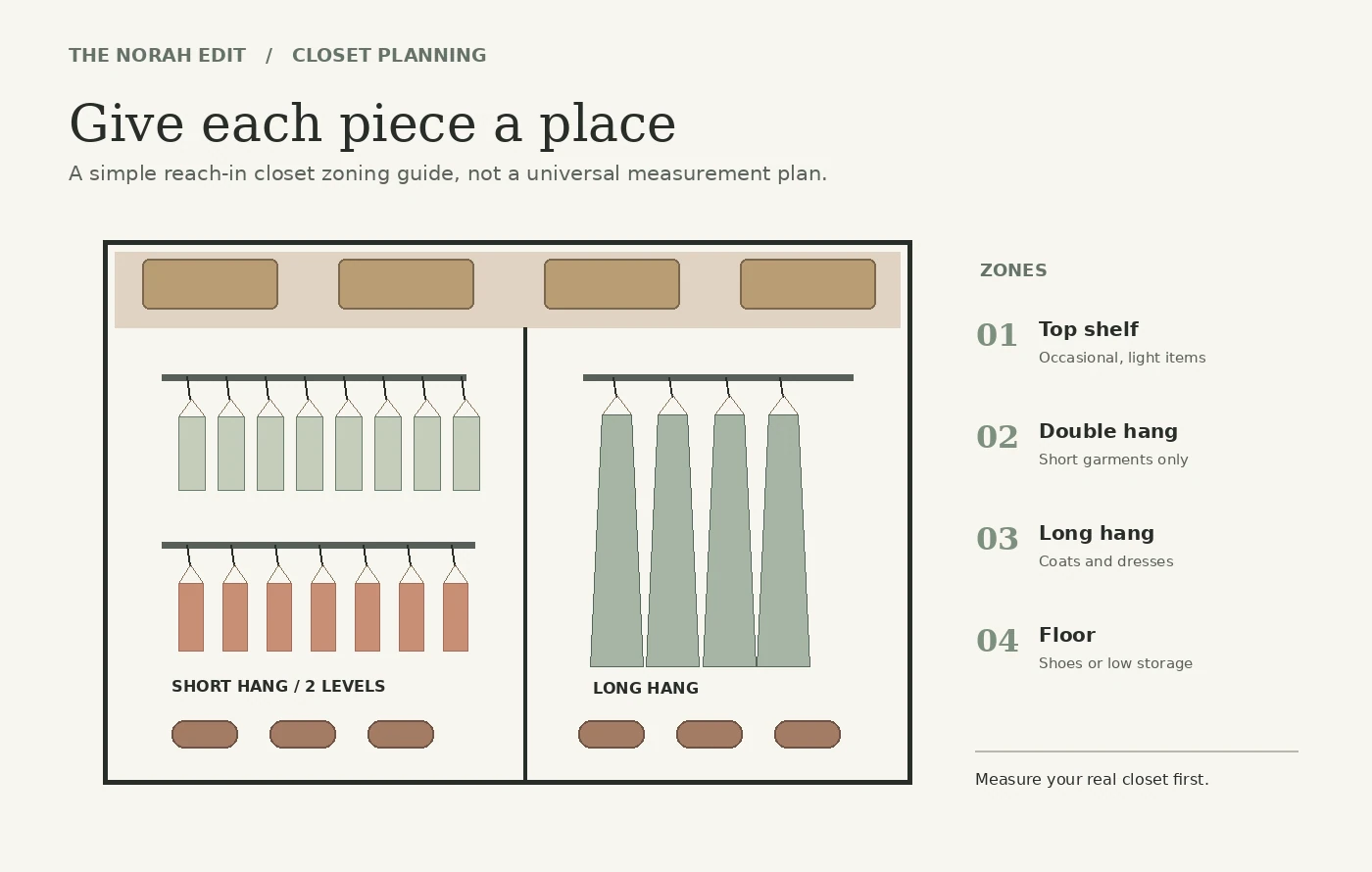
Not every closet needs the same fittings. But a useful starting arrangement is:
- Upper shelf: Light, labeled seasonal containers.
- Left hanging section: Two levels for short garments, if their lengths and the installed system allow it.
- Right hanging section: A smaller full-height area for long dresses or coats.
- Middle shelving: Sweaters and folded clothes in short, defined stacks.
- Floor: Accessible shoes or a stable low bin, without obstructing the door.
- Door: Lightweight accessories only, where clearance allows.
What to buy first, and what to skip
Start with what you already have. Empty the closet section by section, group clothing by how you use it, and measure the awkward spots. You may find that moving a shelf, changing a few hangers, or using an existing basket solves the biggest problem.
If you do need to buy something, prioritize the part that removes the most friction: a better shoe shelf, a set of shelf dividers, or a second hanging level that's properly supported. Buying an entire closet system before sorting your wardrobe often creates more work and expense than necessary.
For renters, check your lease before drilling or changing permanent fittings. Use removable solutions only within their manufacturer-rated limits, and don't load a tension rod or door hanger as though it were professionally installed structural shelving.
Four mistakes that make small closets harder to use
- Buying containers before measuring. A bin can fit the shelf but still block the door, waste depth, or be too heavy to lift from above shoulder height.
- Double hanging every section. Longer clothes need their own uninterrupted space.
- Filling the highest shelf with daily necessities. Frequently used items should not require a ladder each morning.
- Making every inch look full. A tightly packed closet can be harder to maintain than a simpler layout with a little room to move.
Frequently asked questions
How can I organize a small closet without buying anything?
Start by removing unworn items from the daily-use area, grouping similar clothes together, folding sweaters into shorter stacks, and moving off-season clothing elsewhere if you have suitable storage. Put shoes in a visible row and keep daily accessories in one container you already own.
Is double hanging always better for a small closet?
No. It works best when most hanging garments are short. Dresses, long coats, and other pieces that would drag on a lower rod need a full-height section. Measure garments and use hardware appropriate for the intended load.
What should go on the top shelf of a closet?
Lightweight, infrequently used items are usually the most practical choice. Labeled seasonal accessories or spare textiles can work, provided the containers are dry, manageable to lift, and stored on a shelf rated for their weight.
How do I organize shoes in a very small closet?
Keep everyday shoes on a low, accessible rack or in a single row under short garments. Store occasional pairs elsewhere when possible, and check that any added rack leaves enough room for the closet door and hanging clothes.
Can renters install closet organizers?
Many freestanding, hanging, and over-the-door organizers can work without permanent alterations, but they still need adequate clearance and safe load limits. Check lease requirements before drilling and follow the product's instructions rather than relying on improvised supports.
Sources
- The Home Depot: Small Closet Organization
- The Home Depot: Closet Organization Ideas
- U.S. Consumer Product Safety Commission: Clothing Storage Units
The images are generated editorial illustrations of storage arrangements, not photographs of a renovation completed or tested by NorahDecor. Verify any installation requirements, product dimensions, and load limits for your specific closet.