Small Spaces & Apartments
12 Small Apartment Decor Ideas That Make Rooms Feel Larger
Twelve practical small apartment decor ideas for better furniture layouts, studio zones, lighting, storage and renter-friendly changes that feel like home.
- Published
- November 12, 2026
- Reading time
- 14 minutes
- By
- NorahDecor Editorial
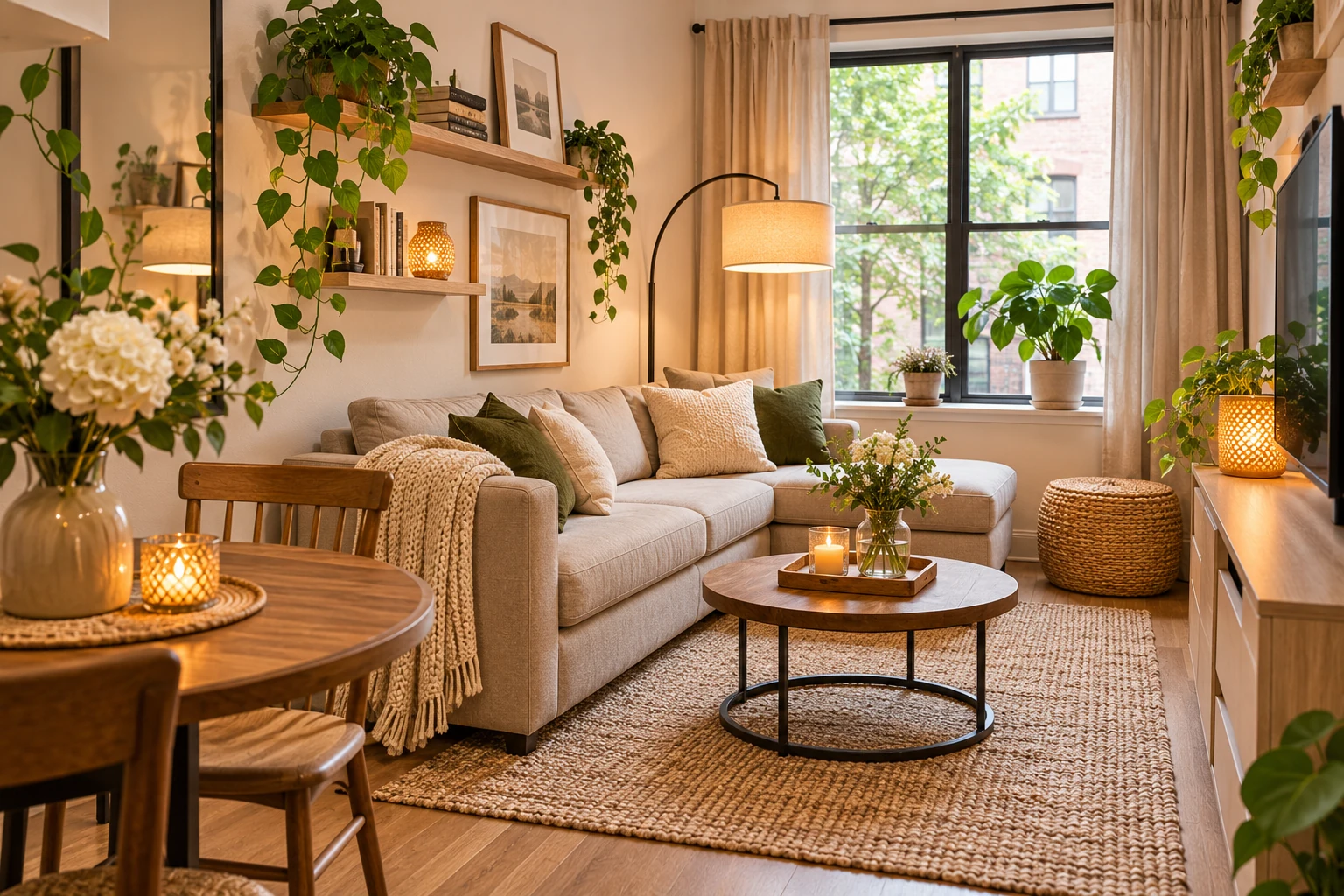
A small apartment does not have to look empty to feel spacious. The rooms that work best usually have enough furniture to make everyday life comfortable, a clear route from one area to another, and a place for the things that tend to pile up by the end of the day.
That is where good small apartment decor ideas begin: not with buying more decorations, but with deciding what each corner needs to do. The right rug can distinguish a sitting area from a workspace. A compact dining table can make two everyday activities possible in one room. And a properly placed lamp can make a dim corner feel like somewhere you actually want to sit.
These twelve ideas are designed for real apartments, including rentals and studios with awkward corners, limited closets, or rooms that serve several purposes. You can use one or two changes without committing to an expensive makeover.
Start with a quick apartment check
Before buying a shelf, swapping a sofa, or hanging a mirror, spend ten minutes noting three things:
- Your daily routes. Where do you walk from the door to the kitchen, bathroom, bed, or sofa? Those pathways need to remain usable, even when a drawer or cabinet door is open.
- Your trouble spots. Where do shoes, mail, chargers, coats, laundry, or bags usually collect? The answer reveals where storage should go.
- Your most-used activities. Does the dining table also serve as a desk? Do you need guests to sit comfortably? Is the bedroom visible from the living room? Plan for the way you actually use the space.
Measure larger furniture, available wall lengths, door swings and the usable space around each piece. Sketching a simple plan on paper is enough. You do not need an exact floor-planning app to recognize that a deep console is making the entrance too narrow.
1. Protect a clear walking path before adding furniture
The quickest way to make a small room feel crowded is to force people to weave around furniture. A chair that looks lovely in a photograph can be frustrating if you have to turn sideways to pass it on the way to the kitchen.
Look at the room from the entry door. Can you move to the places you use most without crossing in front of a table corner or stepping around a planter? If not, try rotating the sofa, moving an occasional chair, or replacing a large coffee table with something smaller.
You do not need an arbitrary clearance number that works for every apartment. Test the actual route with a grocery bag or laundry basket in your hands, and check what happens when drawers, doors, and chairs are in use. Keep required exits and doorways unobstructed.
Best for: Narrow living rooms, combined living-dining spaces, and apartments where one big piece of furniture interrupts movement.
Try first: Reposition what you already own before buying a smaller replacement.
2. Choose the right furniture scale, not the smallest furniture
A room full of tiny tables and occasional chairs can look busier than a room with one properly sized sofa. Think in terms of useful furniture rather than simply choosing the smallest possible version of every item.
A modest two- or three-seat sofa might work better than several mismatched chairs. A coffee table with an accessible shelf can replace both a display table and a separate storage basket. A narrow armchair may make a better reading area than a large sectional extension that blocks a window.
Pay attention to depth as well as width. Deep seating can eat into circulation space, while thick-armed furniture often takes up room without adding seating. Check your doorway and stair dimensions before ordering larger pieces.
Best for: Furnishing an apartment from scratch or replacing one oversized piece.
Watch out: Do not sacrifice comfort just to make a piece look visually light. A sofa that is too shallow for its users is not a successful small-space solution.
3. Use a rug to create a living area inside an open room
In a studio or an open living-dining area, a rug helps the sitting area read as a deliberate zone. It gives the sofa, chair, and coffee table something in common without putting up a physical wall.
Choose a size based on the furniture arrangement. A rug that barely reaches the coffee table can make the seating feel disconnected. If the room allows, position at least the front legs of the main seating on the rug. Where that will not work, aim for a balanced arrangement that does not look like a tiny mat floating in the center.
Let the rug add texture or a quiet pattern, not another unrelated color story. A flatwoven rug may suit a high-traffic apartment, while a thicker rug brings softness where easy cleaning is less of a concern.
Best for: Studios, open-plan apartments, and living rooms that blend into an eating or working area.
Before buying: Mark the proposed rug corners on the floor with painter's tape to check scale and door clearance.
4. Divide a studio with an airy shelf only when it improves the room
An open-backed bookshelf can help define a sleeping zone without the visual weight of a solid partition. Light can move through the shelves, and books or baskets give the piece a second purpose.
However, a divider should make the room easier to use, not create two cramped spaces. Position it so you can still reach windows, doors, and everyday storage. Leave breathing room around the bed, and keep heavier objects lower down.
Tall and top-heavy shelves need proper stability and anchoring according to the manufacturer's instructions. If you're renting, get permission for the necessary anchoring rather than treating an unsecured bookshelf as a harmless temporary divider. A low console or movable textile screen may be more appropriate when a tall unit cannot be safely secured.
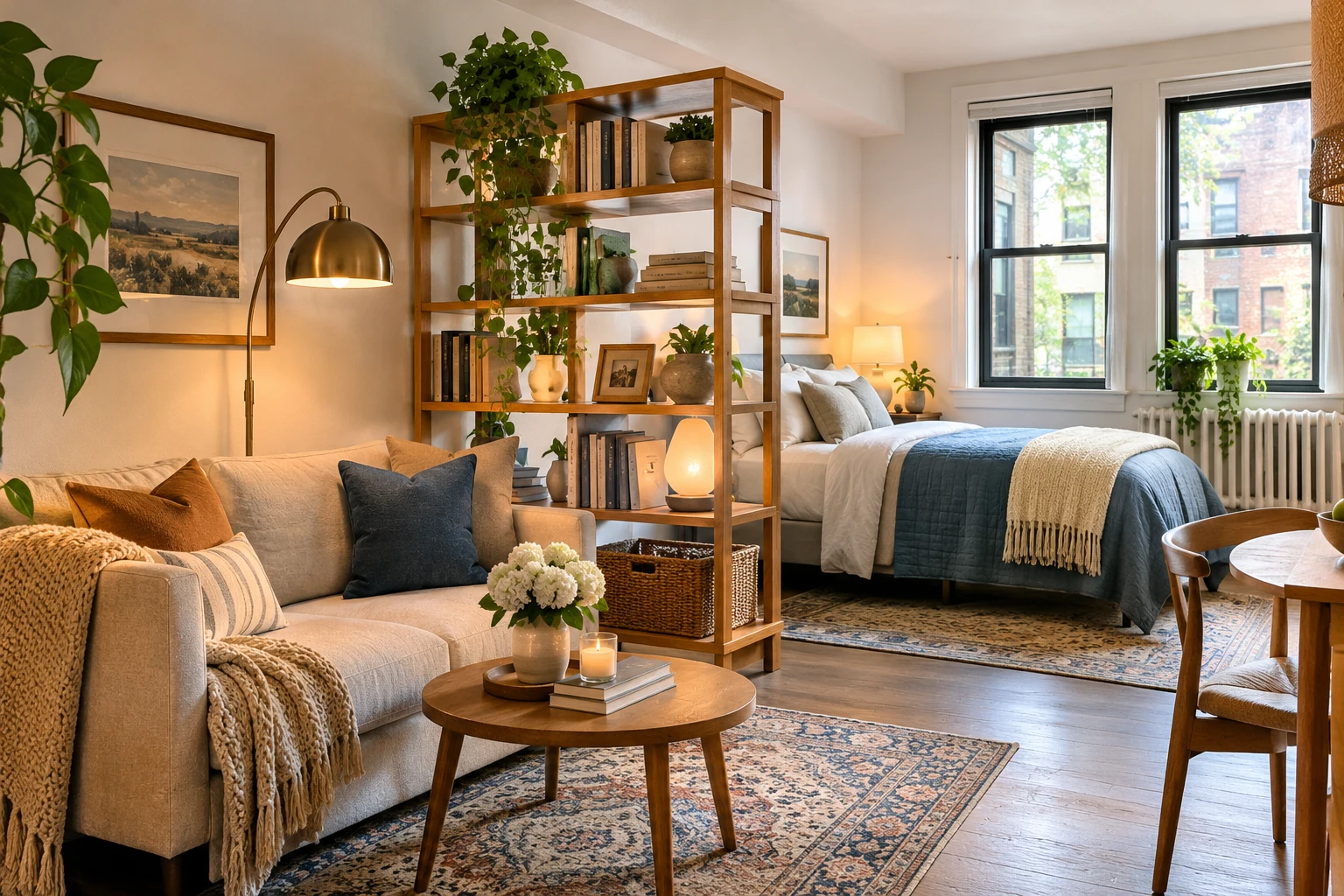
Best for: Studio apartments where the bed is visible from the living area.
Skip it if: The unit would block a needed exit, airflow, access to a window, or a comfortable route through the room.
5. Make a dining nook earn its footprint
You don't need a formal dining room to create a comfortable place to eat. A small round table close to the kitchen can make a combined room more practical. It can also work as a daytime workspace, as long as there is somewhere to put your laptop and paperwork when dinner begins.
Round tables eliminate sharp corners in tight routes, though they are not automatically the most space-efficient shape. A narrow rectangular drop-leaf table may be better against a wall. A wall-side bench can keep seating tucked in, but make sure it is easy to get in and out of.
Use one modest pendant or a nearby lamp to visually signal that the nook has a purpose. Keep the tabletop simple: perhaps a small bowl or a single vase rather than a large centerpiece that must be moved before every meal.
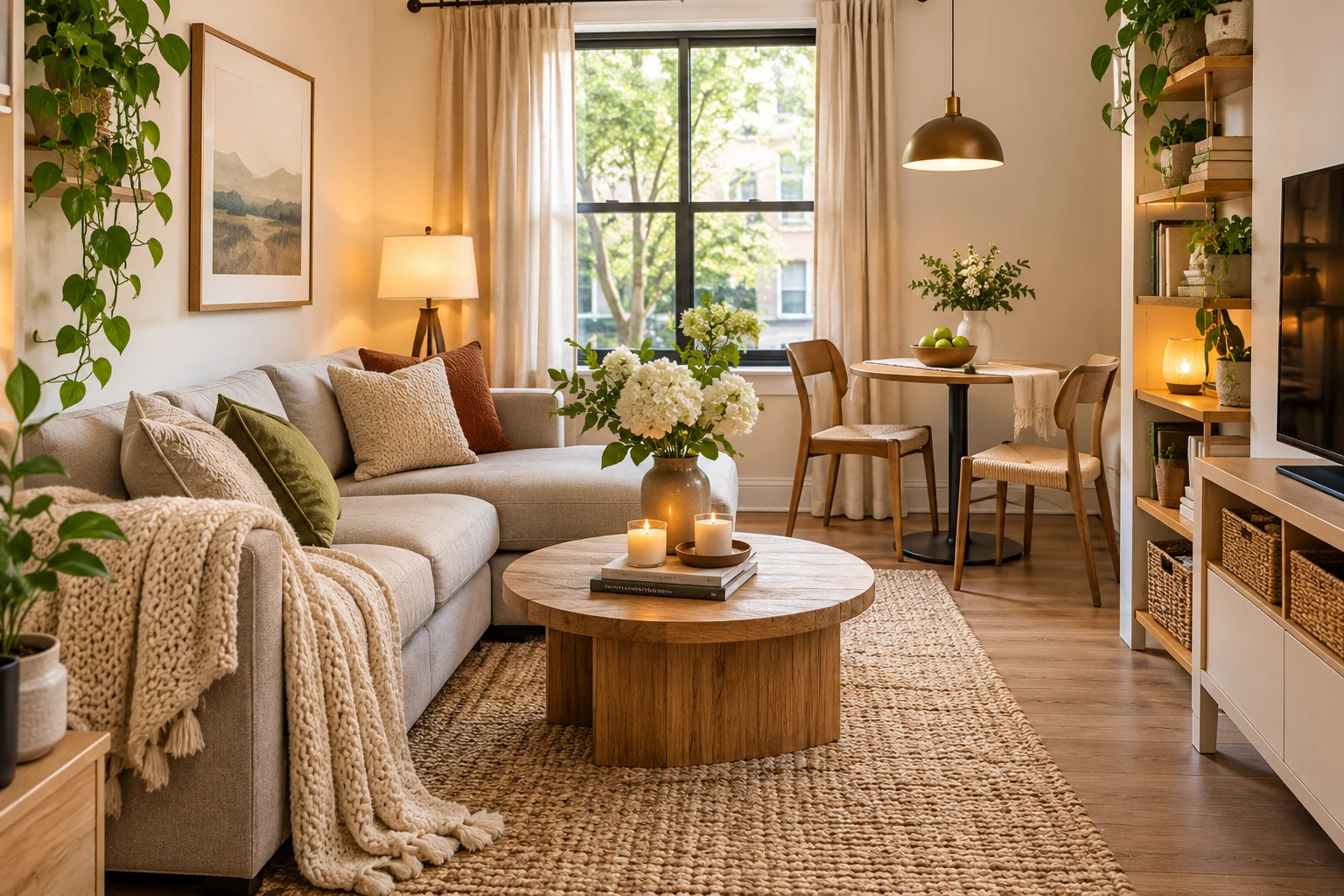
Best for: Small one-bedroom apartments and studios without a dedicated eating area.
Before you buy: Pull a chair away from your current table and test the space it needs. A table that fits on paper might not be comfortable in use.
6. Let furniture solve more than one problem
The most helpful multifunctional pieces are the ones you will use in both roles. An ottoman with storage can hide spare blankets and provide an extra seat. A coffee table with a bottom shelf can hold books and a basket. A bed with drawers may reduce the need for a second dresser.
Do not choose convertible furniture only because it seems clever. Fold-down desks, lift-top tables, and sleeper sofas have moving parts and require clearance. Measure them in their open positions and check whether the mechanism is easy to use.
Choose closed storage for visual clutter, especially cables, paperwork, and small accessories. Keep a few meaningful pieces in view so the apartment doesn't turn into a wall of sealed bins.
Best for: Living rooms where storage, work, and guest seating compete for the same square footage.
Avoid: Buying a storage bench that is too bulky to place conveniently or a lift-top table that cannot fully open.
7. Go upward with storage, but keep the room visually balanced
When floor space is limited, the wall above a low cabinet or desk can be useful. A pair of shallow shelves can hold books and a few everyday objects without introducing another freestanding unit. A narrow bookcase may be easier to place than a wide storage cabinet.
Use a mix of open and closed storage. Display items that are pleasant to look at or used regularly, then hide paperwork and loose supplies in drawers or baskets. Leave some open shelf space rather than packing every inch with decor.
Keep heavy items lower, check the wall construction and weight limits before installing shelves, and anchor tall furniture as directed. An adhesive hook designed for a lightweight bag is not a substitute for structural mounting of a loaded shelf.
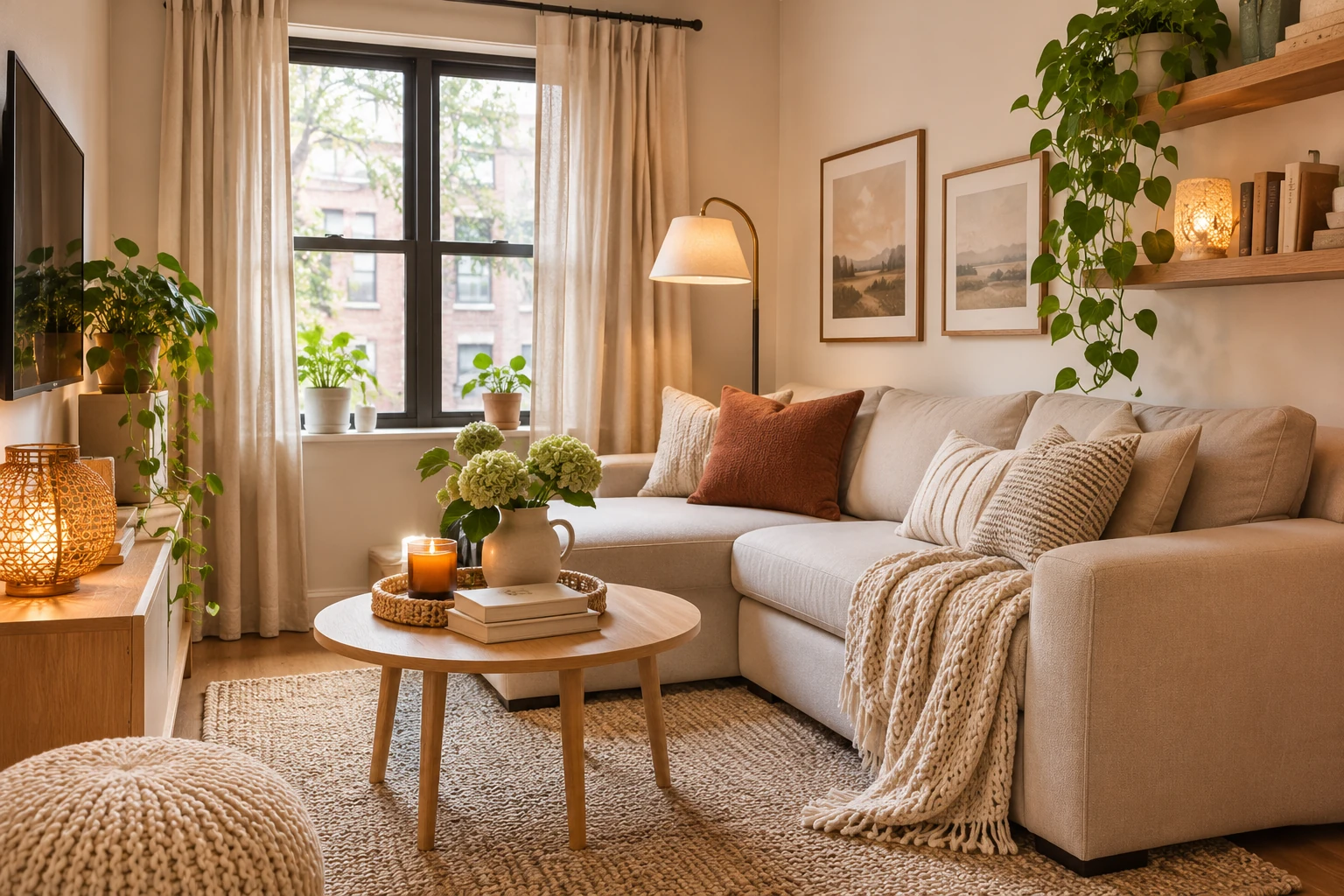
Best for: Apartments with limited floor storage but accessible wall space.
Rental note: Confirm what drilling or mounting is allowed in your lease and obtain permission where required.
8. Let daylight travel through the apartment
A small room can feel surprisingly open when daylight reaches beyond the windows. Heavy window treatments, tall furniture in front of the glass, or a dark room divider can interrupt that effect.
Try curtains that stack clear of the window when open. A curtain rod wider than the window can allow the panels to rest against the wall, if the room and landlord permit the installation. Avoid placing a tall storage unit across the brightest window simply because that wall has unused space.
There is no rule that every small apartment must be painted white. If you love deeper color, use it intentionally and balance it with adequate lighting and a thoughtful arrangement. Light is affected by windows, room orientation, finishes, and the actual furnishings, not paint color alone.
Best for: Apartments with one main window or a combined room that relies on light from one side.
9. Use several smaller light sources instead of relying on one ceiling fixture
An apartment often needs different light at different times: brighter light for reading or cooking, and softer light for relaxing in the evening. One ceiling light rarely handles every task comfortably.
Try three simple layers: general room light, a task lamp near the sofa or desk, and one warm accent source in a darker corner. A small table lamp can be more welcoming than an extremely bright bulb overhead. Keep lamps clear of fabrics, use suitable bulbs, and route cords where they won't create a trip hazard.
If floor space is limited, a compact plug-in sconce may work where permitted, although its cable still needs safe routing. A dimmable table lamp is another low-commitment way to create more control without changing wiring.
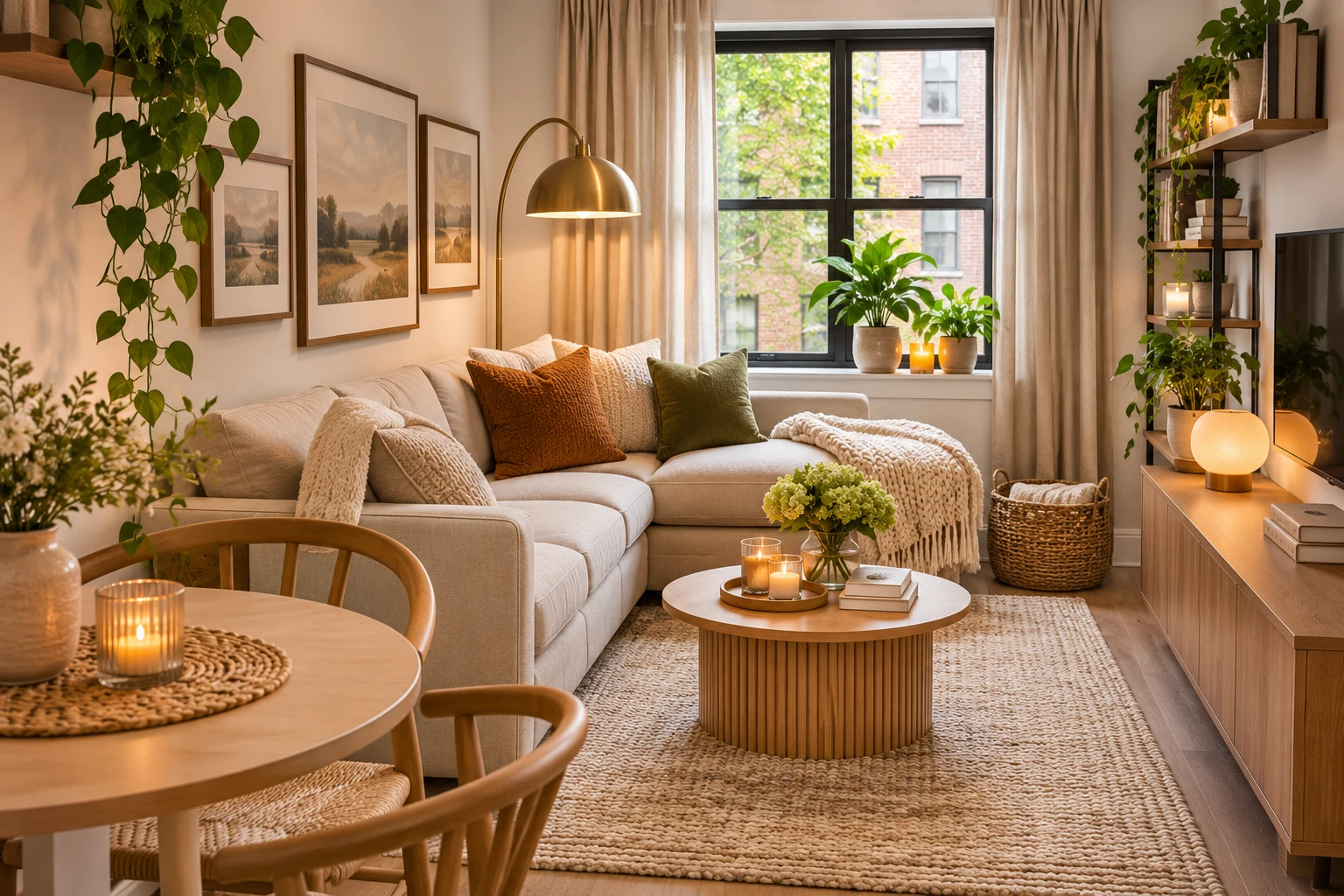
Best for: Rentals with basic ceiling lights or rooms that feel flat and dim at night.
10. Put a mirror where it reflects something worth seeing
A mirror can brighten a room when it reflects natural light or an open view. It can also make a narrow apartment feel cluttered if it reflects a busy storage shelf, the television, or a stack of laundry.
Before choosing a mirror, stand where it would hang and look at what it will show from the sofa or doorway. A mirror across from a window is often useful, but there is no single perfect location. Sometimes a modest mirror beside the entryway is more practical than a dramatic oversized piece.
Use appropriate mounting hardware for the mirror's weight and wall type. Leaning a large mirror against a wall without a suitable safety restraint is not an acceptable substitute for proper installation, especially around children or pets.
Best for: Dark corners, narrow entryways, and rooms that benefit from reflected daylight.
11. Repeat a few colors and materials across connected areas
In a compact apartment, you can often see the living room, dining area and maybe part of the bedroom at the same time. When every corner has a completely different palette, the space may feel visually fragmented.
Try one consistent base such as warm white walls, walnut or natural oak furniture, and two accent colors that appear in more than one location. You can repeat a muted blue from a sofa cushion in a dining print, or carry a rust tone from a rug into a ceramic vase. Repetition creates connection without requiring everything to match.
Texture keeps a restrained palette interesting. Mix smooth ceramics with woven fabrics, wood grain, metal, and a few plants. You can also make a darker room feel cohesive using deeper greens or warm browns. The goal is continuity, not an all-beige apartment.
Best for: Open-plan apartments where several functions share one visible space.
Avoid: Buying complete matching furniture sets just to achieve consistency.
12. Make the entrance useful, then add a personal detail
The first few feet inside a small apartment can determine how tidy the rest of the place feels. If there isn't a home for keys, shoes, coats, and incoming mail, those items tend to drift onto the dining table or sofa.
Start with the smallest setup that solves the problem: a shallow tray for keys, a few properly installed hooks, and a compact shoe solution that does not block the doorway. If there is space, a narrow mirror or a small piece of art makes the area feel welcoming. If there isn't, skip the console table entirely.
Add one or two personal pieces that mean something to you, such as an illustration of a favorite place or a handmade ceramic bowl. A lived-in apartment should reflect its owner without every surface becoming storage for unassigned objects.
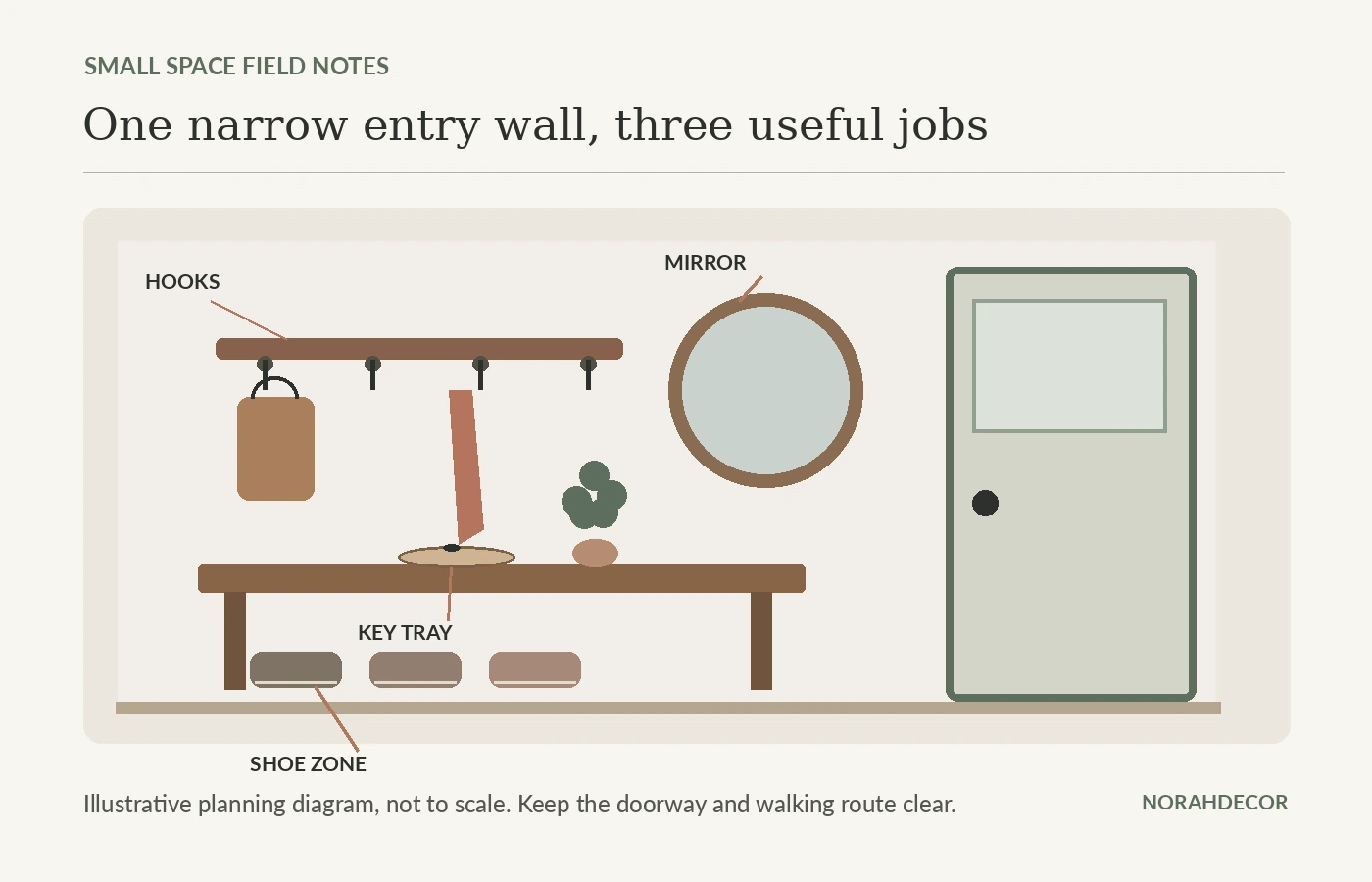
Best for: Apartments where daily essentials collect on the nearest table.
A practical plan if you're decorating on a budget
If you're starting from scratch, prioritizing purchases makes a bigger difference than trying to finish every corner at once:
- Use what you already own. Move the furniture and identify real clearance problems first.
- Fix the daily friction. Add storage where shoes, bags, laundry, or chargers actually accumulate.
- Get the main furniture right. A comfortable sofa, usable bed, and suitable dining or working surface matter more than matching accessories.
- Improve lighting and window treatments. These can change how the room functions throughout the day.
- Finish with meaningful decor. Art, a rug, textiles and plants can follow once the layout works.
Secondhand pieces can be helpful, but check structural condition, stability, dimensions, and any relevant product-safety concerns. Don't assume a free cabinet is a bargain if it won't fit through the doorway or cannot be anchored safely.
Common small apartment decorating mistakes
Buying from a photo rather than measurements. A full-size sectional may look balanced in a styled apartment photo but overwhelm a different room. Measure before ordering.
Using storage as a substitute for sorting. Ten more baskets will not solve a collection of things you never use. Give every storage purchase a specific purpose.
Blocking daylight or circulation. A divider, tall shelf or floor plant may look attractive but make the apartment less comfortable or harder to navigate.
Making every surface a display. A shelf is easier to clean, and a room often feels calmer, when some space is left intentionally empty.
Assuming renter-friendly means no safety precautions. Removable adhesives, freestanding units and leaning mirrors all have limits. Check product instructions, wall type and rental permissions before installation.
Frequently asked questions
How do I decorate a small apartment without making it look cluttered?
Start with a furniture layout that leaves comfortable walking routes. Choose a few pieces that do useful work, store loose daily items out of sight, and limit small decorative objects to a handful of meaningful groupings. You can still use color and pattern; clutter is more about how many things compete for attention than whether the apartment is painted white.
What furniture works best in a very small apartment?
Choose pieces based on the jobs you need them to do. A comfortable compact sofa, a table suited to both meals and work, and furniture with accessible storage are often helpful. Measure the furniture in its usable position, including open drawers and extended tables, before deciding that it fits.
Can I divide a studio apartment without building a wall?
Yes. Rugs, furniture orientation, curtains and open shelving can create visual zones. Choose a solution that preserves daylight, circulation, and access to windows and exits. Tall shelving must be stabilized and anchored as directed, with any necessary rental permissions.
Do light colors always make a small apartment look bigger?
No. Light finishes can help bounce available light, but room layout, furniture scale, windows and lighting matter too. A darker palette can look deliberate and comfortable when there's adequate light and continuity between spaces.
How can I decorate a rental without damaging the walls?
Focus first on furniture placement, rugs, lighting, textiles and freestanding pieces that do not require permanent modifications. Check the lease before installing hardware or applying wall products, and follow product restrictions. Tall furniture and large mirrors still require appropriate safety measures, even in a rental.
Sources
- IKEA: How to decorate a studio apartment — layout, zones, storage and layered lighting.
- IKEA: Work wonders with room dividers — practical visual divisions for smaller spaces.
- U.S. Consumer Product Safety Commission: Anchor It — furniture and television tip-over prevention.
Image note: The room images in this article are AI-generated conceptual illustrations of decorating ideas. They do not document an actual apartment makeover or first-hand product testing.