Bathroom
Bathroom Storage Ideas That Actually Work in Small Spaces
Twelve practical bathroom storage ideas for using awkward gaps, vertical space, vanity cabinets and nearby storage without making a small room harder to use.
- Published
- November 12, 2026
- Reading time
- 12 minutes
- By
- NorahDecor Editorial
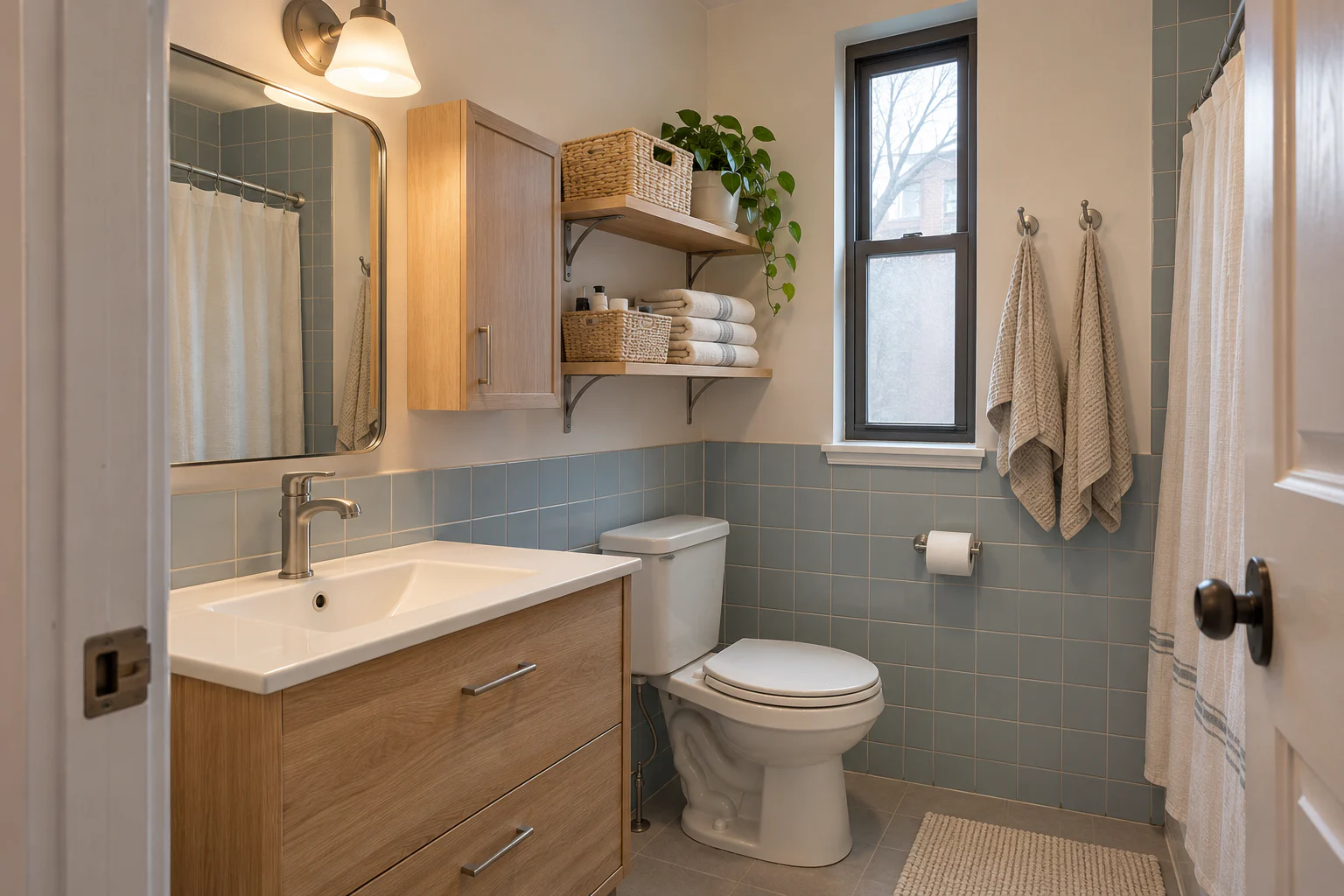
A small bathroom can feel crowded long before it runs out of actual space. A few bottles gather around the sink, towels end up on the door, and the cabinet under the vanity becomes a place where things disappear. The answer usually isn't to buy a bigger organizer. It's to give each item a sensible place and make better use of the space you already have.
These bathroom storage ideas focus on the spots that tend to go unused: the area around sink plumbing, the wall over the toilet, the back of the door, and narrow gaps beside fixtures. Some work in rentals without drilling. Others make sense if you own your home and want a more permanent solution.
The goal isn't a bathroom with nothing on display. It's one where the things you use every morning are easy to reach and everything else has a place to go.
Start with a five-minute storage check
Before shopping, take a quick inventory of your bathroom. You don't need a complicated plan, just answers to three questions:
- What needs to be within reach every day? Usually hand soap, a toothbrush, skincare, and one or two hair products. Give these the easiest spots.
- What only needs to be nearby? Extra toiletries, clean towels, backup toilet paper, and occasional-use tools can live higher up or behind a door.
- What's getting in the way? Check cabinet doors, the bathroom door, the toilet tank lid, the shower entrance, and the path between the sink and toilet.
Measure the width, depth, and usable height of any space you're thinking of filling. Remember that a 7-inch gap isn't automatically suitable for a 7-inch-wide cart. You still need clearance to pull it out and clean around it.
If you only change one thing today, clear the sink of everything you don't use daily. That one decision makes the rest of the storage plan easier.
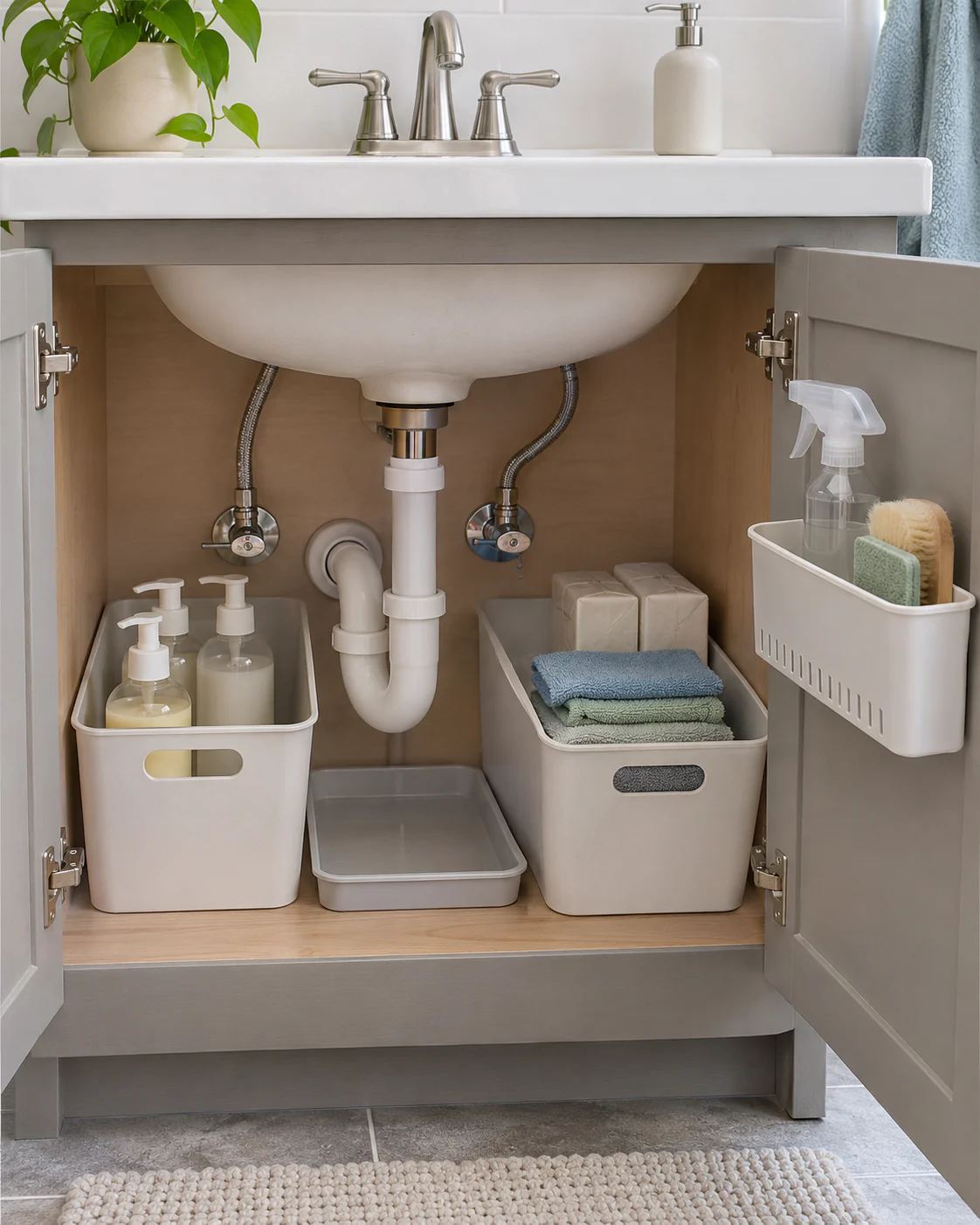
1. Fit organizers around the plumbing under the sink
The cabinet under a small vanity often looks larger than it is. Pipes, shutoff valves, and the drain trap take up the center, leaving awkward pockets on either side.
Instead of forcing in one large bin, try two or three removable organizers that fit around the plumbing. A shallow basket can hold backup soap and toothpaste; a taller one can hold cleaning cloths or hair tools that are fully cool and dry. If you have a cabinet door, a low-profile caddy can hold light, frequently used products, provided it doesn't hit the pipes or shelves when the door closes.
Best for: Vanities with doors and limited drawer space.
Before you buy: Measure around the pipes, not just the cabinet opening. Keep shutoff valves accessible, and don't store anything where a small leak would go unnoticed.
2. Choose a mirrored cabinet instead of a plain mirror
A mirror is already taking up valuable wall space above the sink. Swapping a flat mirror for a shallow mirrored cabinet can give toothpaste, skincare, and small everyday items a home without adding another piece of furniture.
Look at the cabinet's depth, door swing, and the position of the light above the mirror. A recessed cabinet can look especially tidy, but it requires more work and isn't suitable for every wall. A surface-mounted version is often the simpler option.
Best for: Bathrooms with almost no counter or drawer space.
Watch out: Check for wiring and plumbing before any wall modification. Mount the cabinet according to its instructions and the wall type. Don't assume a lightweight-looking cabinet can hang safely from ordinary drywall screws.
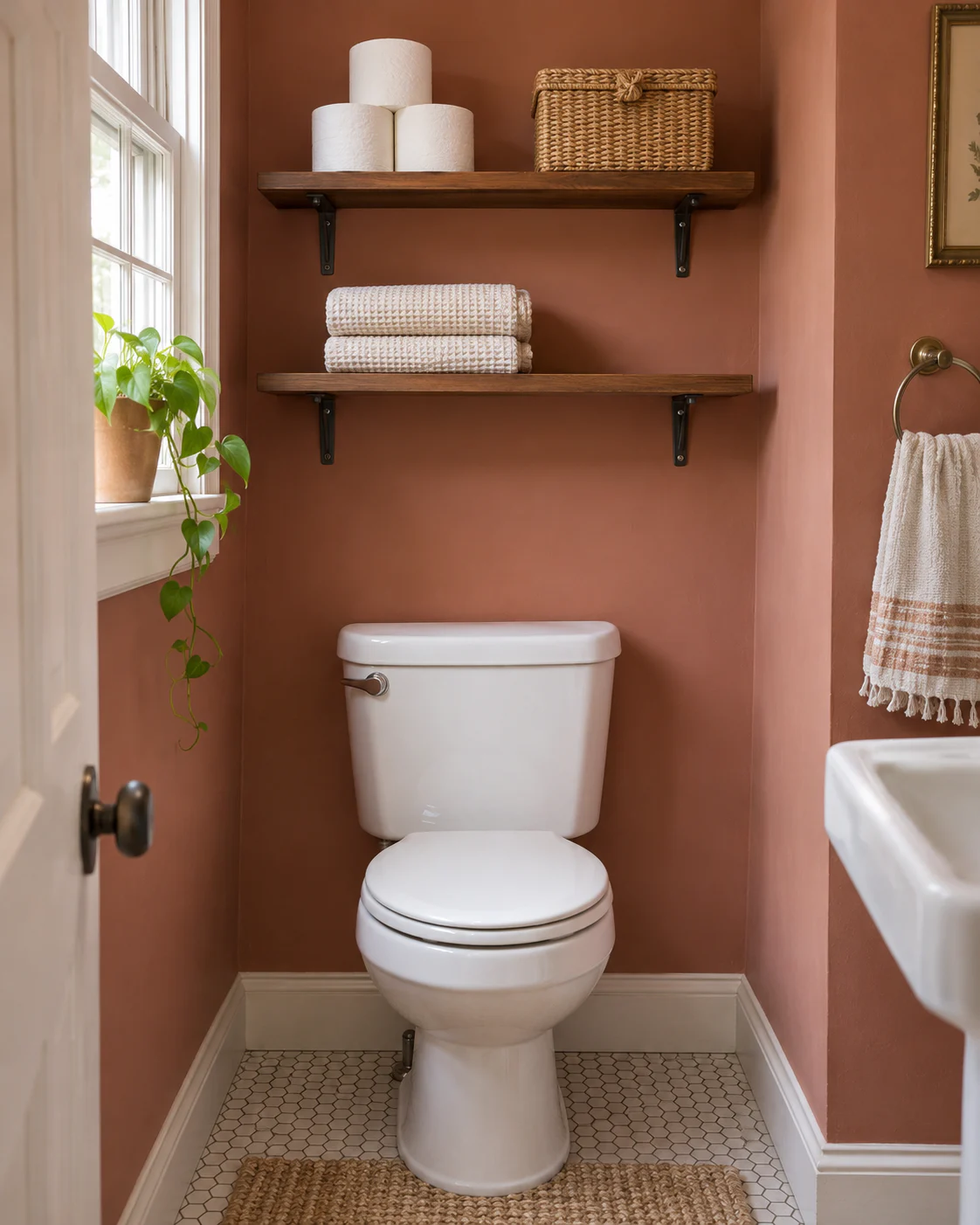
3. Use the wall above the toilet, but keep the shelves shallow
The area above the toilet is often one of the few stretches of unused wall in a small bathroom. One or two shallow shelves can hold spare rolls, folded hand towels, or a small closed basket of backups.
Keep the arrangement simple. A matching pair of containers will look calmer than a dozen loose products, and a little empty space makes it easier to reach what you need. Choose a height that leaves room to use and service the toilet comfortably.
Best for: Bathrooms with little floor space and a clear wall above the toilet.
Watch out: Don't overload shelves or place heavy, breakable objects where they could fall. Use mounting hardware rated for the wall and shelf load, and keep access to the toilet tank and any required service areas.
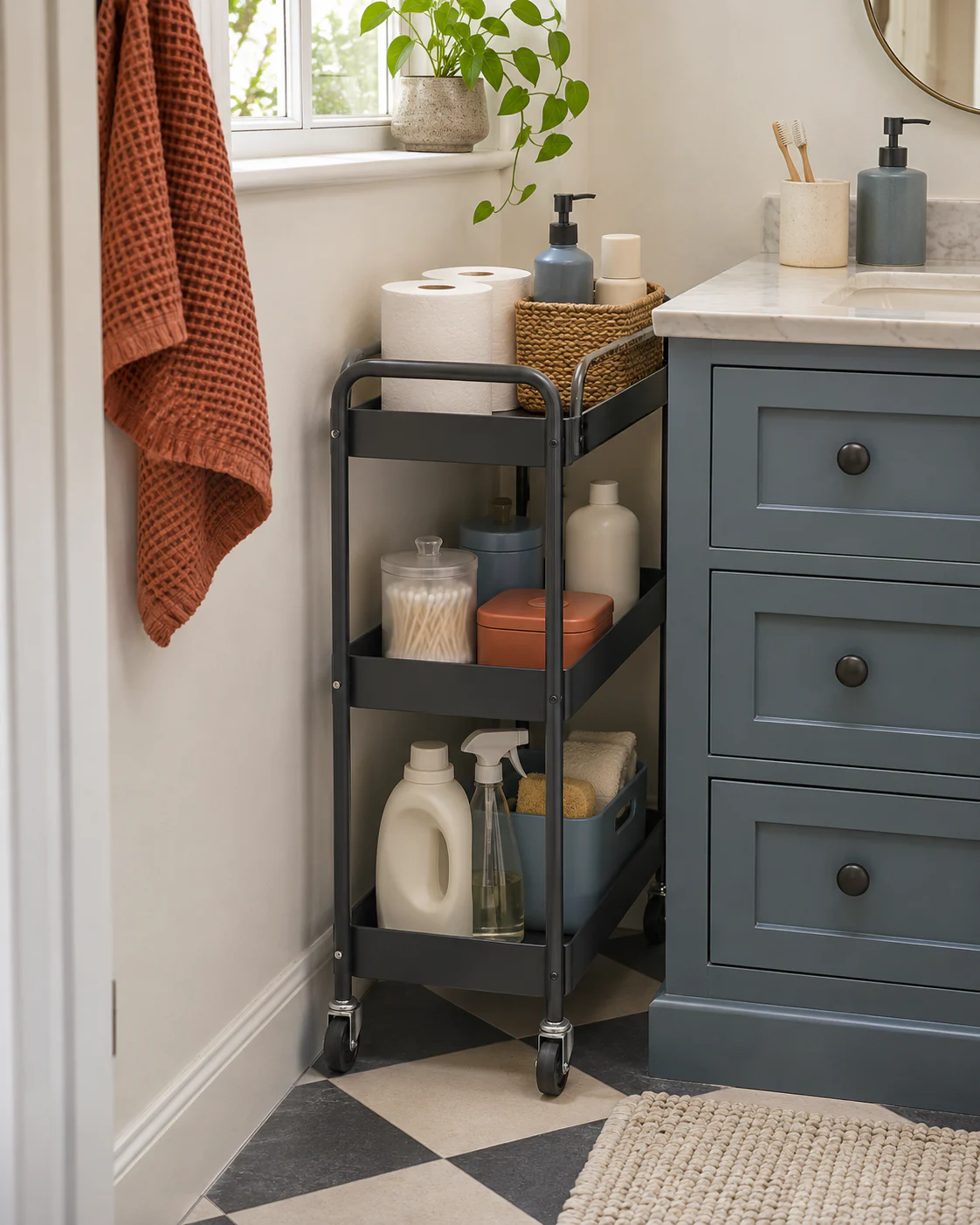
4. Try a slim rolling cart in an unused gap
A narrow cart can turn the space between a vanity and a wall into useful storage. It works especially well for spare toiletries, toilet paper, and items you'd rather not display on the counter.
A cart with raised edges and easy-clean shelves is more practical than an open decorative trolley. Choose a finish that tolerates a damp room, and keep heavier supplies on the bottom. Wheels are useful only if the cart can move freely without scraping the wall or blocking a drawer.
Best for: Renters and bathrooms with an accessible gap beside the sink or toilet.
Before you buy: Measure the narrowest point, including baseboards and any projecting handles. Make sure the cart can be pulled out without blocking the main walking route.
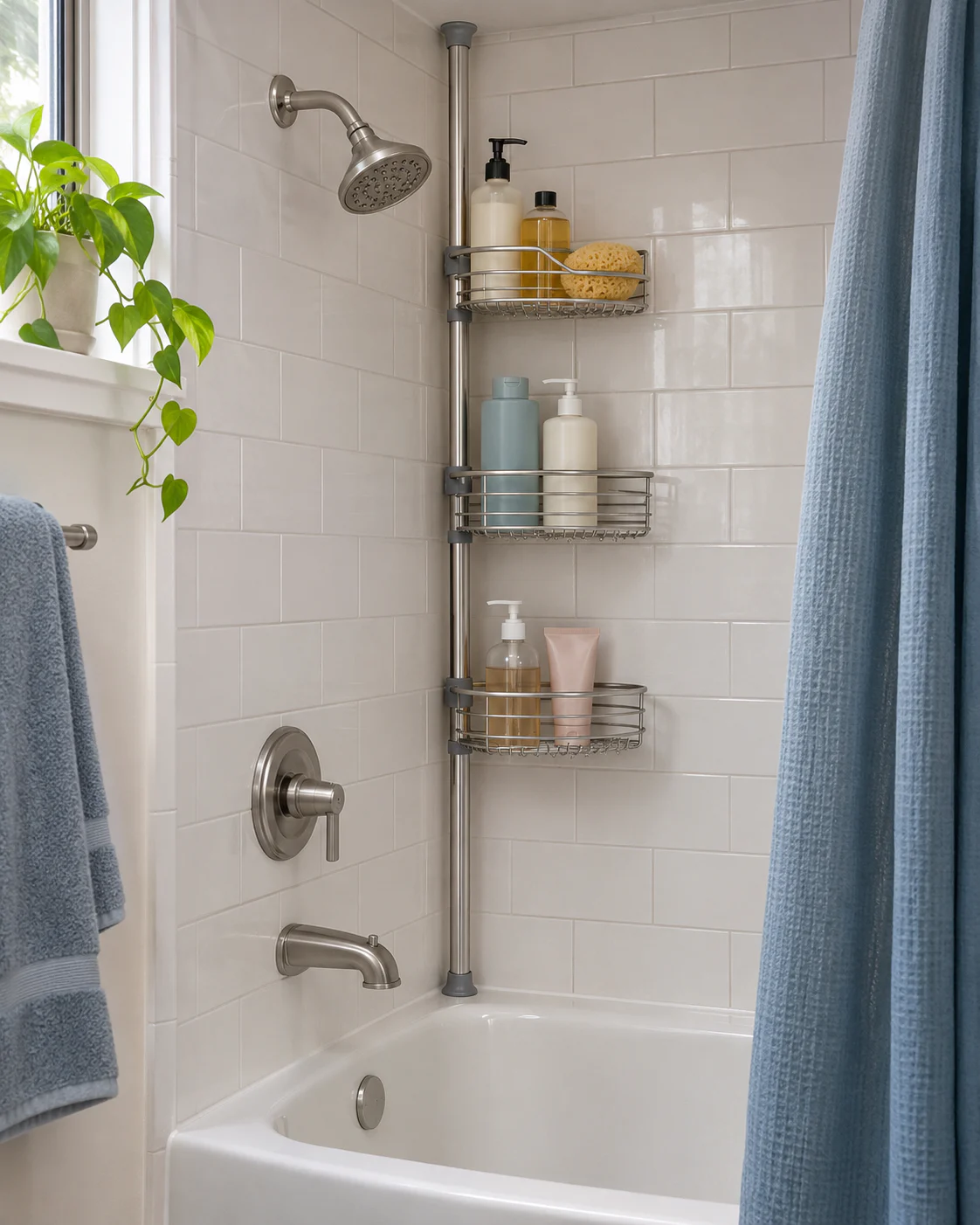
5. Organize the shower vertically
Shower shelves tend to fill up because every bottle gets its own spot. A corner caddy, properly fitted tension-pole organizer, or manufacturer-approved adhesive basket can group products vertically and keep the tub rim clear.
Place everyday bottles at a comfortable height and less-used products lower down. Choose materials and finishes intended for wet spaces, and favor designs that allow water to drain instead of pooling under the bottles.
Best for: Tub-shower combinations and small shower stalls without built-in niches.
Watch out: Suction and adhesive fittings have surface and weight limitations. Check compatibility, cleaning and curing instructions, and test their hold. Avoid installing anything that interferes with shower doors, grab bars, or safe movement.
6. Put the bathroom door to work
The back of a door can hold items that otherwise take up wall or floor space. Over-the-door hooks are useful for robes and towels; a shallow hanging organizer can hold lightweight accessories if it won't obstruct the door.
Choose fewer, sturdier hooks rather than hanging everything in one long row. A towel needs space to dry, so don't bunch multiple wet towels tightly together.
Best for: Rental bathrooms and rooms where the walls are already crowded.
Before you buy: Check clearance between the door and frame, whether the door closes properly, and whether the organizer will hit a towel bar, cabinet, or wall.
7. Divide shallow drawers into daily-use zones
A small vanity drawer often becomes cluttered because tiny things slide together. Use adjustable dividers or several washable trays to create zones for oral care, skincare, grooming tools, and hair accessories.
Put the most-used items at the front. Don't create a separate compartment for every single object; the goal is to make morning routines faster, not to spend more time maintaining a system.
Best for: Bathrooms with drawers but limited counter space.
Before you buy: Measure the inside of the drawer, including usable height. Drawer organizers that fit the external cabinet width may still be too large.
8. Add hooks where a towel bar won't fit
A towel bar needs a long, uninterrupted stretch of wall. Hooks can work better in narrow bathrooms, especially for hand towels, washcloths, or robes.
A row of hooks beside the vanity, on the back of the door, or in a dry section near the shower can be more useful than one crowded rail. Keep enough space between damp items to help them dry.
Best for: Tight wall sections and shared bathrooms.
Watch out: Use only hooks rated for the surface and the load. Adhesive hooks can be convenient for renters, but they aren't suitable for every painted, textured, or frequently wet surface.
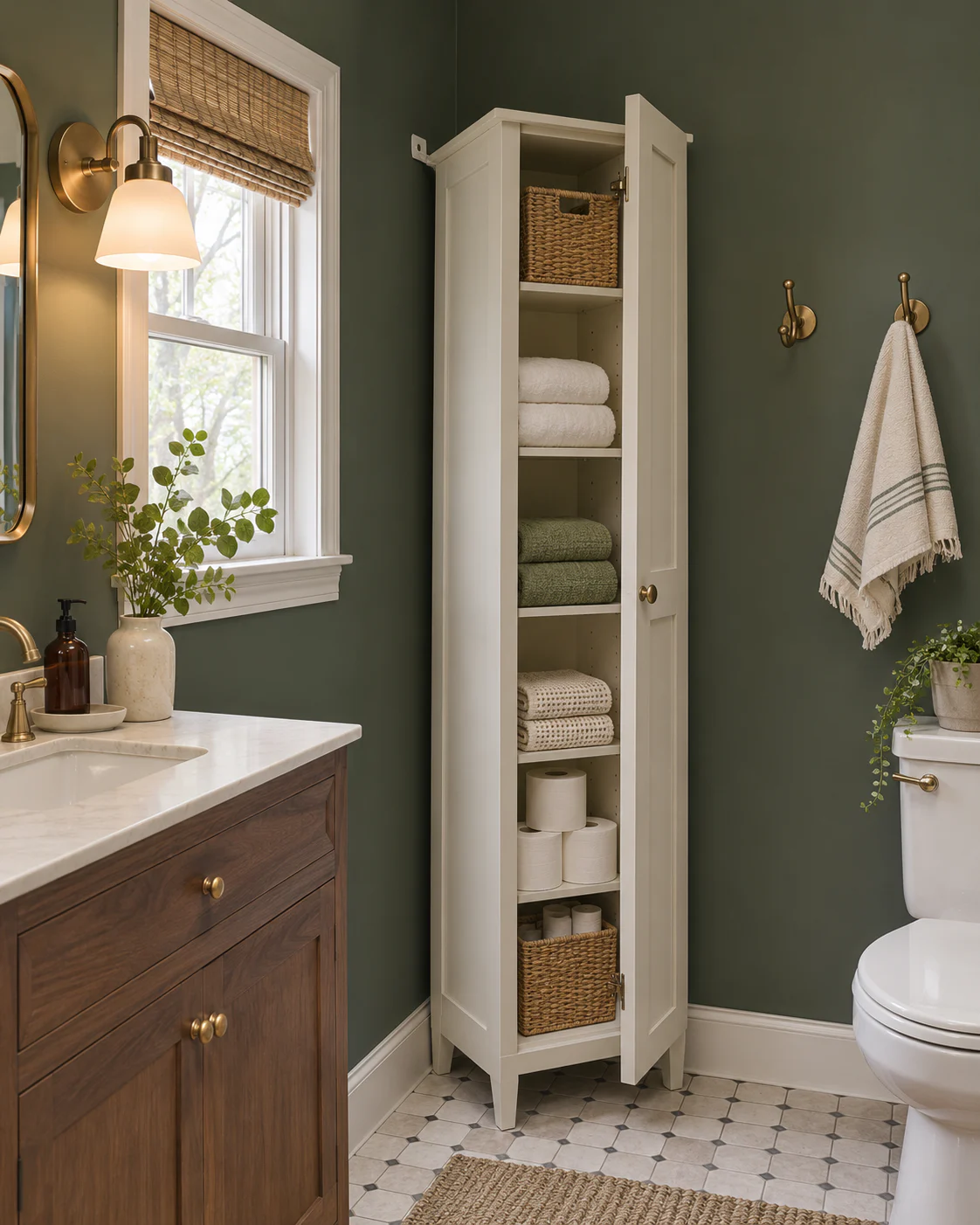
9. Give the corner a tall, narrow cabinet
When floor space is limited, a slim vertical cabinet can hold more than several little baskets spread around the room. Adjustable shelves are useful because towels, toilet paper, and bottles all need different clearances.
A cabinet with doors is particularly helpful when you want to keep visual clutter down. In a tiny bathroom, one piece of closed storage often looks tidier than lots of open organizers.
Best for: Bathrooms with a spare corner and no linen closet.
Watch out: Measure the door swing and walking space. Tall freestanding furniture may need anti-tip anchoring; follow the manufacturer's instructions and don't obstruct ventilation or service access.
10. Reserve open shelves for the things you actually want to see
Open shelves are useful, but they can make a small room look busier when every product is visible. Keep one shelf for attractive, frequently used items, such as a hand towel and a small tray, and use closed cabinets or baskets for backups.
This is also a good place to mix finishes without making the whole room look too coordinated. A pale ceramic tray, a practical container, and a folded towel can sit comfortably together without resembling a showroom display.
Best for: Bathrooms that need both function and a little personality.
Try this: Leave part of each shelf empty so it's easy to take things out and wipe the surface clean.
11. Move bulky backup supplies out of the bathroom
Not every spare roll, extra towel, or unopened bottle has to live in the bathroom. If you have a hallway closet, bedroom cabinet, or laundry shelf nearby, make it the home for bulk supplies and keep only a small working stock in the bathroom.
This is especially useful in humid rooms with weak ventilation. Dry storage can be a better location for fabric backups, cardboard packaging, and other moisture-sensitive items.
Best for: Very small bathrooms with no room for tall storage.
Try this: Keep a small refill basket in the bathroom and move the larger backup collection elsewhere.
12. Choose one storage system before buying another basket
A collection of mismatched organizers can create clutter of its own. If the vanity is crowded, first decide whether the problem is too many things, poor grouping, or not enough storage.
Start by removing empties and duplicates. Group what's left by how you use it, then choose only the organizers that solve a real problem. Under-sink bins, a drawer tray, and two wall hooks may be enough. A dozen decorative baskets probably won't help if they all end up holding random products.
Best for: Anyone whose bathroom seems to get cluttered again just days after a tidy-up.
Try this: Live with the new arrangement for a week before buying more containers. You'll quickly notice which items still have no sensible home.
The easiest storage plan for your bathroom type
If you rent: Start with a slim cart, drawer organizers, an over-the-door rack, and removable hooks approved for your surfaces. Avoid drilling, tile modifications, and any change your lease doesn't allow.
If your vanity is tiny: Prioritize a mirrored cabinet, properly fitted under-sink organizers, and one nearby hook or shelf. Keep the countertop for truly daily-use items.
If there is no linen closet: Use a narrow closed cabinet or a nearby storage area for extra towels and backup supplies, rather than stacking everything in the bathroom.
If the shower is crowded: Reduce duplicate bottles first, then add one secure, draining vertical caddy. More shower storage is useful only when it doesn't restrict movement.
Three mistakes that make bathroom storage less useful
Buying before measuring. A cart that is too wide or a cabinet door that can't open fully creates a new problem. Check width, depth, height, and how each item moves.
Ignoring moisture. Ventilation and drying matter in a room with frequent steam and splashes. Use the bathroom exhaust fan or appropriate ventilation, fix leaks promptly, and choose materials suited to the location. The U.S. Environmental Protection Agency emphasizes controlling moisture as a key way to reduce mold problems.
Treating every free wall as safe storage. Wall-mounted shelves and cabinets need suitable fasteners, and tall furniture should be secured when its instructions require it. Keep heavy items off high open shelves, especially above fixtures where they might fall.
A small bathroom can still feel calm
The best bathroom storage ideas don't necessarily add the most shelves. They make daily things easier to reach and remove the visual noise around them. Start with one frustrating area, measure it carefully, and choose a solution that works with the room rather than squeezing more into it.
A clear sink, a drawer that opens easily, and towels that actually have somewhere to dry may make more of a difference than a full bathroom makeover.
Frequently asked questions
How can I add bathroom storage without drilling?
Try drawer dividers, a slim rolling cart, over-the-door hooks, and surface-compatible removable hooks or caddies. Always check weight limits, moisture suitability, and whether the organizer interferes with a door or fixture.
What is the best way to store things under a bathroom sink?
Use small removable bins that fit around the drain and supply lines. Group daily-use items separately from backups, keep shutoff valves accessible, and leave enough visibility to notice leaks.
Are shelves above a toilet a good idea?
They can work well for light supplies when properly mounted, shallow enough for comfortable access, and positioned so the toilet can still be used and serviced. Avoid heavy or breakable objects overhead.
What should I keep off a small bathroom countertop?
Move duplicate toiletries, backup products, infrequently used tools, and bulky containers into drawers or closed storage. Leave out only the things you use regularly and have room to clean around.
How do I keep stored towels from getting musty?
Store clean towels dry, avoid stuffing damp towels into closed baskets or cabinets, and make sure used towels can dry between uses. Address persistent dampness or poor ventilation rather than relying on storage products alone.
Sources: